A loaded word

I am disabled, technically.

*cringe*

I hate that word, and I hate that it applies to me. When you think of the word “disabled”, what do you think about? I am willing to bet the image in your head is not someone who lives independently, works full-time and doesn’t use any adaptive gadgets. I don’t blame you for the stereotype that popped into your mind. The definition of “disabled” is physically or mentally impaired, injured or incapacitated. When you think of someone who is “impaired, injured or incapacitated”, the stereotype you’re imagining probably fits the definition.

But all of those words have negative connotations attached to it, whether we like it or not, and that is part of the reason why I hate the word “disabled”.

I do my job just like any other two-handed reporter. I cook dinner just like anyone else. I do my laundry the same way you do. Saying I’m disabled implies that I need assistance throughout my day or that I’m different or not normal.

Synonyms for “disabled” include words such as “weakened”, “wounded”, “lame”, “wrecked”, “sidelined”, “decrepit”, “helpless”, “incapable” and “powerless.”

I am none of the above. And I would be offended if anyone tried to suggest I was.

The word “disabled” can also mean handicapped or paralyzed, and those words would certainly apply to some, but not to all. That’s my other frustration with using the word—it casts a wide and broad net and categorizes millions of very different people in the same way.

I have no idea what it is like to be in a wheelchair or to be deaf or blind or have a brain injury or mental health disorder. Individuals who have one of those characteristics also have no idea what it is like to have one hand. And yet, we’re lumped together with one word, implying we share the same struggles.

Why do we need this overly broad and negative term to describe people? Why can’t we be more specific and accurate?

I am an amputee. That is a fact, and that is how I should be described. Sure, that word can have its own negative assumptions attached to it, but it’s much more accurate than “disabled”, in my opinion.

If someone is blind or has cerebral palsy or Down’s syndrome, use those terms to describe them. Don’t use the word that suggests these individuals are “helpless” or “decrepit”.

And if we must keep using the word, let’s change the narrative around it, because being “disabled” doesn’t mean you are not strong, capable or skilled. I’d argue it actually means the opposite, because anyone classified as “disabled” has had to endure challenges that most people will never have to face. The synonyms for “disabled” should be brave, courageous and tough.

But until the thesaurus is changed, don’t say I’m “disabled.”
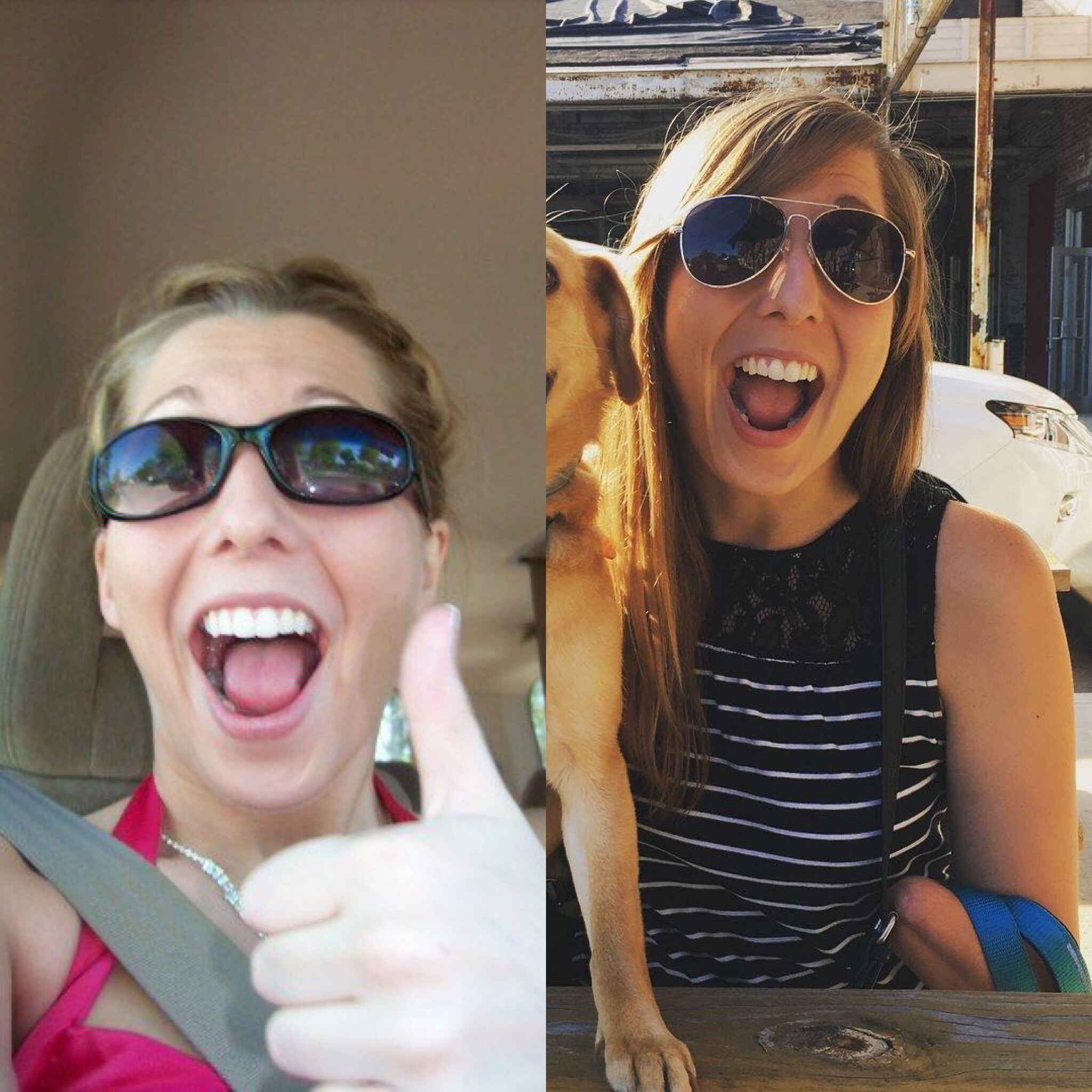
My 10-year challenge

Ten years.

I keep repeating it to myself, because it’s not sinking in.

But it’s true—I have been an amputee for 10 years, as of today.

adde85ee-f4a9-4209-b26a-9f195c1a0571.jpg

When I saw all of the 10-year challenge photos circulating social media recently, it made me curious what mine would look like. It only took a few seconds before I noticed it. The one thing missing from my current photo that was in the one from 2009—my left hand.

A lot has changed in 10 years, and as I reflect on everything I’ve accomplished since that dreary winter morning, I am really proud of myself.

  • I conquered my fear of driving on highways again (although I still hate those rumble strips).
  • I finished college (even though some well-intentioned family members wanted me to drop out of school and move home, at least for awhile).
  • I fulfilled my dream of becoming a journalist (even though I’d argue it’s not exactly the easiest profession for someone with one hand).
  • I taught myself to type again (and I’m 99 percent sure I’m faster now than I ever was before).
  • I drove myself from Arizona to Kentucky (over the course of three days, but I did it alone).
  • I learned to wear stud earrings again (despite initially believing I couldn’t put them on my ears myself).
  • I tried yoga classes (even though I have to modify many of the poses).
  • I rode a bike again (even though I was convinced I’d crash and hurt myself).

This list is not meant to brag, but rather to remind myself that even though there have been ups and downs, it’s been a pretty amazing decade.

At the time of my car accident, I’m not sure I ever stopped to think about how things would be different. Sure, I thought about how I would have to re-think tying shoes or buttoning shirts, but I refused to reconsider any of my life goals. I remember thinking at the time that people were ridiculous for being worried that I would do such a thing.

Now at age 28, when I think back to how strong I was at 18, I’m astonished. How did I manage to not only have that attitude, but never waiver from it? Living as an amputee can be a lot to cope with and adjust to at any age, but when you consider everything else a freshman in college is dealing with, adding this on top of it could have easily been insurmountable.

I’ll admit I had frustrating moments as I re-learned certain tasks, but somehow I always adapted and didn’t dwell on it. I kept on living.

I ran nine half marathons and one full marathon. I traveled to Italy, England and China. I saw dozens of my favorite musicians in concert. I became an aunt to three wonderful nephews and an adorable niece. I sang karaoke (once). I watched one of my sisters get married. I saw the Grand Canyon. I saw the Hoover Dam. I stood in the same room as the president and vice president of the United States.

I laughed; I loved; I cried.

I have lived my life to the fullest for these past 10 years, because I know I’m lucky for every day I’ve had since Feb. 8, 2009.

I could have died that day. As my SUV rolled across Interstate 65, the driver’s side window broke and the roof crushed in toward me. Thankfully, my seatbelt kept me from flying from the vehicle, but debris and glass were everywhere. I am so incredibly lucky that I only lost a hand and some of my scalp (which has recovered quite well).

That feeling of appreciating life and being grateful for what I do have is what has powered me through the difficult moments. That feeling is what has reminded me that giving up is never an option.

I’ll admit that I did not immediately realize what the date was today, but that feeling is always with me, even if it’s not always at the top of my mind.

Here’s to next 10 years.

Finding the perfect activity tracker is harder than you might think

Even though I’m a regular runner, until recently I didn’t have any way to track my mileage or time my runs.

I did start tracking my steps through an app on my iPhone, but other than that, I was one of the few runners without some sort of smart watch or gadget to help me train.

The biggest reason for why I never had the urge to buy one or ask for one was because I don’t really wear watches or bracelets anymore. It would have to go on my right wrist, because it would slide off my left one since there’s no hand there to stop it, and I don’t have a left hand to easily secure the watch onto my right wrist.

But earlier this year, I started looking into Fitbits. Some of the bands are styled similarly to watches, but others appeared to just snap into place. Perfect, I thought.

I tried putting on my mom’s Fitbit Alta, which has metal circles that snap into the rubber band, but it wasn’t as easy as I thought. So I looked around the company’s website at some of the other options and noticed one style that featured a wider, rectangular-shaped metal piece that snapped into the band. That seemed like it’d be easier to lock into place, so I decided if I got one, it needed that style of a band.

But by the time I was searching for one to buy, the Charge was one of the only models that still came with that band and had the features I wanted — I don’t exactly need one with a screen, for example, since I can’t touch it and use it. And I could have gotten the clip version, but that one doesn’t have nearly as many functions as the Charge.

Fitbit wasn’t selling the Charge directly from it’s website anymore, and most online retailers didn’t have any in stock either. It was frustrating and disappointing. I thought I had finally found an activity tracking watch that could work for me. But Fitbit had moved on to selling its Charge 2, which had the traditional watch band and a big screen on it.

Eventually, I found a first generation Charge online from Dick’s Sporting Goods and immediately ordered it.

I’m happy with it so far — I have mastered a way to put it on everyday without too much difficulty, and I can track my runs now.

But I’m worried I won’t be able to find anything like this in the future, and I know this will only last so long. It’s already technically out-of-date, and I know if anything happens to it while it’s still under a warranty, Fitbit won’t replace it with the same model. Sure, a newer model is the preference for most people when their gadget breaks, but not for me in this case.

Some of the newer versions have the same band as the Alta, which I could probably figure out with some more practice, but it certainly wouldn’t be my preference.

I’m just hoping that Fitbit or any of the other companies that sell activity trackers introduce a product that can be easily worn and adjusted by one handed individuals in the future. Given all of the technology that exists today, it has to be possible, right?

I know it’s not a huge market for these businesses, but maybe it could just be some sort of band option that could work for a one-handed person or a two-handed person.

Plus, the Amputee Coalition of American estimates that there are 2 million people with some sort of limb loss, and based on the lower limb to upper limb ratio, there could be 500,000 people missing an upper limb.

Those aren’t huge numbers, but again, it doesn’t have to be something that would only be appealing to hand amputees. Just something that makes it possible for us to use these types of products.

In the meantime, I’ll keep wearing my Charge and hoping it lasts forever.

What disadvantage?

For anyone with two hands, I’m sure that having one hand is seen as a disadvantage. Makes sense.

But I don’t think amputees see it that way, or at least I don’t see it that way.

For Christmas, I bought one of my nephews the Rock ‘em Sock ‘em Robots game. For those of you who have never played or seen it, it’s the game where you grasp onto two buttons and rapidly push both until the head on your opponent’s robot pops up.

When I stepped up to take a crack at it — of course, after my nephew went through many rounds — my dad said to me, “You might be at a disadvantage here.”

I brushed off the comment, sat down, and quickly beat my dad at the game. What disadvantage?

I used my left arm to push one button and my right hand on the other. No problem.

Later the same day, I re-learned how to shoot pool. I say “re-learned” because I had played when I was younger and had two hands, but never really had the opportunity to try with one until now.

My dad and boyfriend suggested I use the bridge to help steady the pool stick, since that’s usually where your second hand comes into play. But I decided not to use it.

Was I being stubborn? Yes. But did I actually need it? Not really.

I used my arm to steady the pool stick and was able to shoot relatively well. Longer shots were more difficult — and I did use the bridge a few times for those shots — and shots where I had to hold the stick over another ball on the table didn’t go too smoothly.

But other than that, it didn’t seem any different to me. After nearly eight years of living with one, I’m still trying or re-trying things, but I’ve learned that if I think it through, I can figure out how to do just about anything that I did with two hands. It just takes a few extra seconds for me to pause, play out the new process in my head and then implement that new process.

Instead of thinking “maybe I can’t do this,” I think “how can I do this?” I might not have the right or best answer the first time, but I don’t think I’ve come across anything yet that I haven’t eventually figured out. I’m sure there will regularly be new challenges for me to face, but it keeps life interesting, right?

But in full disclosure, I did still lose in pool, but I don’t think that had anything to do with having one hand. I think my boyfriend is just better at pool than me, and I’m willing to admit that.

Lessons in talking to amputees

Some people can be impressed by the smallest accomplishments.

A young man recently approached me at a beer festival to ask about how I lost my hand, which isn’t very uncommon. Strangers often ask about it, and it doesn’t bother me to share my story.

(If I was I obviously wouldn’t have started this blog.)

Usually the random conversations are people commenting about how whatever I happen to be doing at the time is impressive — typing, carrying a lot in my arms and any sort of athletic activity that involves using your hands are common examples — or telling me about how they know an amputee.

All conversations that I’m happy to have. This guy started talking about both topics — he had a veteran friend that lost several limbs, and he’s impressed that his friend and me even get out bed in the morning.

There are certain things that I’ve accomplished with one hand, like braiding my hair, that I’m proud of, but the standalone fact that I have one hand and live my life is not impressive.

Regardless, I nodded and smiled along until the guy started using words like “handicapped” to describe his friend and me, and said it must be so difficult to not be “normal.”

Those words are like daggers to me. Sure, most people have two hands, but a lot of people don’t. That doesn’t mean we don’t have normal lives with jobs, friends and family. That doesn’t mean we consider ourselves vastly different from everyone else. That doesn’t mean we’re handicapped.

Yes, I’ve joked about whether I could get a handicap sticker for my car, but I would never actually consider whether that’s even possible. I don’t need any sort of special treatment, especially for being able to park closer to a door. My legs and feet work just fine.

Even when something does involve using your hands, like typing for example, I don’t need any special equipment.

When my current editor offered me my job, he asked me if I would need anything special, and followed the question with this comment:

“It’s clear from reading your work that your accident has not hindered your journalism.”

Correct. I told him I appreciated the inquiry, but nothing would be needed.

Obviously, this random guy had no idea whether I took advantage of special treatment or not, but it still doesn’t mean he should automatically describe amputees as handicapped or not normal.

My boyfriend, who was also listening to this conversation, actually became more irritated than I did and tried to explain why saying things like that aren’t OK. The guy had also made comments about how impressed he was that my boyfriend could overlook such a thing like having one hand to be with me. It was amazing to this guy that I was able to find anyone to date.

Yes, I somehow managed to find a guy who loves me and actually usually forgets that I only have one hand. It’s shocking.

We gave the guy some advice for future interactions with amputees and went back to the tasting tents. It certainly wasn’t the highlight of the event for my boyfriend or me, but we moved on just hoping that we taught the guy something so if he sees another amputee the interaction can be a little more positive.

“Our Father”

There are very few circumstances when you’re expected to hold someone’s hand, but that situation arises during every Catholic mass.

Just before communion, everyone joins hands and recites the “Our Father” prayer. You take the hand of the person to your left, and you take the hand of the person to your right.

See my problem?

I’ve spent seven years going to church with one hand, and I still haven’t figured out the best way to deal with this. Every time I go, I immediately start worrying about it as soon as I sit down if there is someone to my left. I know the time will come when I’m supposed to hold their hand, but I don’t have a hand to offer.

It doesn’t really matter if I know the person to my left or not. It’s still stresses me out. If it’s someone I know, I sit there wondering, “Will they just grab my arm? Or is that too weird for them? I don’t want to make them feel uncomfortable.”

Some family members and friends have taken the initiative and held my arm; others choose not to. It doesn’t matter me. Either way is fine.

I still remember what I believe was my first time at church after the accident. It was Easter 2009, and my grandma was sitting to my left. I didn’t realize I would even have a problem until it was time for “Our Father” during the mass. My grandma didn’t miss a beat and grabbed my arm as if my hand was still attached.

If it’s a stranger, I’m always hoping they don’t feel obligated to take my arm or say anything. Let’s just say the prayer without feeling obligated to link together, OK?

Most recently at church, a stranger was to my left and my mom was to my right. The man held his right hand out as the prayer started, glanced down and noticed my missing limb. He looked back up and continued with the prayer.

I actually try to avoid this situation whenever possible though by sitting at the end of the pew with someone only on my right side, because I hate the anxiety it causes me.

Honestly, I don’t care if someone wants to hold my arm or not. It’s the not knowing what they’ll do and whether or not it will be awkward that stresses me out. It’s a situation that’s out of my control and quite frankly makes me feel uncomfortable.

I keep wondering if this will ever change. If I’ll ever go to church one day, and not worry about it leading up to the “Our Father,” or if I won’t try to be strategic with where I sit. But after seven years of this awkward internal feeling, I’m not sure it’s going to fade.

‘Do you need help with your plate?’

I have a love-hate relationship with buffets.

Yes, as a self-described picky eater, I love all the options a buffet provides compared to a predetermined plated meal. I don’t think I’ve ever come across a buffet where I couldn’t find at least one item I would eat. I’m always thankful for the make-your-own-salad and rolls.

But for the past seven years, buffets have been difficult for me to navigate. Think about everything you grab in a buffet line — silverware, napkin, salad bowl, plate, dessert, etc. — while scooping food at the same time. Now imagine doing that with one hand. Not so easy is it?

Some buffets are better than others, like when there’s room to put my plate down on the table while I use my hand to take a serving. In lines where that’s not an option, I awkwardly pin the plate against my body with my left arm. But this really only works if it’s a glass plate, and even then I run the risk of getting food on my clothes if anything creeps toward the edges. Anything plastic or paper isn’t strong enough for this trick. If it’s paper or plastic, I’m basically forced to find a place to set my plate down while I pile food on it.

I always think ahead and leave my drink behind — it’s just one more thing to hold onto, and it’s not needed with me in line. Sometimes I’ll come back and grab my eating utensils after I set my plate down to avoid juggling a fork, knife and spoon with my plate.

I have managed to fill a salad bowl and separate plate, but it usually involves carefully moving the bowl around my plate as it continues to fill up and eventually sitting it on top of the other food as I walk back to my seat.

Most recently, I ditched getting a dessert because I couldn’t handle carrying that dish along with my plate. And I love dessert.

In seven years, I’ve been through more buffet lines — from causal backyard cookouts to formal dining — than I can count. People I know well usually don’t bother to ask if I need help because they know about the aforementioned tricks. But, often, I’m asked if I need assistance.

Whoever it may be — a friend, colleague or catering staff member — means well, I’m sure. But it actually drives me crazy. To me, it says, “You look like you’re struggling. Let me help you.” Don’t get me wrong, buffets can be a pain sometimes, but I’m not struggling. I know I could return and grab a dessert later, or just start with my salad bowl and then fill my plate with the main dish and sides later. I don’t because I know I can find a way to act like everyone else shuffling through the line, or at least I think I’m acting that way. When I’m asked if I need help, it makes me feel like I stand out.

That example when I skipped dessert actually wasn’t because I didn’t want to return to grab a piece of cheesecake. I stayed at my table with only my dinner plate because a woman working for the catering company approached me near the end of the line and asked, “Do you need help with your plate?”

I’m sure she meant well, but it made me feel so awkward that I didn’t want to try to add a dessert plate to my carrying capacity, and I certainly didn’t want to return only for her to see me again and think, “I knew she needed help.”

Would it be easier for someone to hold my plate while I went through the buffet line? Absolutely. (At my sister’s wedding, the staff did this for everyone in the wedding party, and it was wonderful.)

But life isn’t easy. Someone isn’t always going to be there to carry my plate, and I will not let myself ever get to used to a lifestyle where I’m expecting that help. Before I even left the hospital after my accident and my mom was helping me clean up and get dressed, I realized I needed to figure out how to do things on my own, at all times. My mom wasn’t coming back to college with me. She wasn’t going to be there to wash my hair. I had to adjust, so I did.

Navigating buffets is just another thing I knew I needed to learn. While I appreciate the offers to help, I’ll continue to turn them down and awkwardly find my way through the line.

Running through it

Less than a quarter of the way into my 12-mile run, “Survivor” by Destiny’s Child started playing.

It was the perfect song for my run because just 12 hours earlier, I was limping around my apartment to ease pressure on one of my toes on my right foot. I banged my foot against the couch the week before, and accidentally hit it again that night. I’m not even sure if “clumsy” accurately describes me anymore.

The pain from the second impact almost had me in tears. Almost.

During the minutes that followed, I started wondering if this was the final blow that would keep me from running the Indianapolis 500 Festival Mini Marathon the following weekend. I went to sleep with a cold pack covering my toes and not knowing whether I’d be able to endure my last long training run I had scheduled for the next day.

I woke up that morning with my foot feeling how it had been for days — OK, but not great. Could I run on it? Probably. Should I run on it? Probably not.

But I have never let an injury stop me, so I certainly wasn’t to start now. I knew I needed to get in another long run before the Indy Mini. My longest training run had only been about 11, which is plenty by some training standards, but I’ve been training with the goal of setting a personal record. So, I slipped on my shoes and headed out the door.

I managed to survive about 12 miles, which is probably impressive given the state of my right foot.

I know this post doesn’t really have anything to do with having one hand, but my attitude before and during this run reminded me a lot of my attitude immediately after my accident — I wasn’t going to take no for an answer. I wasn’t going to listen to anyone tell me that my life had to be different or had to dramatically change. Was I injured? Absolutely. Did I ever say I wouldn’t do something just because of that? Absolutely not.

Some would call this being stubborn. I call it being determined.

I used this determination to run my sixth half marathon Saturday and achieve my second best time. I didn’t set a personal record, but I’m proud of finishing in less than two hours after I spent days wondering if I should even run the race.

Some people advise me against it and suggested I let my toe heal. But I knew it could heal in the days and weeks that followed.

It’s this determination that has gotten me through the past seven years and will continue to help me through every day to come.

Why I skipped this year

Let’s consider this the make-up post for February. (See this post for reference.)

On Feb. 8, 2016, I woke up to my ringing alarm, hit snooze and saw the date before I set my phone back on the nightstand.

February 8.

I rolled backed over, catching a few extra minutes of sleep before getting out of bed and getting on with my day. I went to work and wrote a story about a new study on tax increment financing districts. It was an ordinary day.

But in the back of my mind, I knew it wasn’t. I didn’t really give much thought to it throughout the day, but I knew it had meaning and that meaning was never going to disappear.

It’s the day my life changed forever. It’s the day doctors amputated my left hand after concluding there was nothing that could be done to save it. It’s the day I had surgery to stretch my scalp to cover the injuries, at least temporarily. It’s the day my mom received probably the worst phone call of her life, which then caused more panic-inducing calls to other family members. It’s the day I flew in a helicopter, but have almost no memory of it.

It’s not a day I like to reminisce about, which is part of the reason why after six years of writing anniversary blog posts, I skipped it this year. I’ll always recognize the date, but I don’t need to dwell on it.

Making up for lost time

It’s easy to set goals. It’s not easy to establish a way to reach those goals.

At the beginning of the year, I declared two New Year’s resolutions — read a book every month and write a blog post every month. And here we are, on May 1, five months into 2016, and I’ve failed on both accounts.

Actually, saying I lasted until May 1 is an overstatement. Technically, I failed on the blog posts from the very beginning. I dropped the ball on reading when I didn’t finish “Season on the Brink” at the end of March. Whoops.

But I think the reason I haven’t stuck to either goal is because I didn’t specify how I would do it, and knowing how you’re going to accomplish something is half the battle. I didn’t set aside time each day or part of the week that would be dedicated to either one of these things. I never said I would spent “x” number of hours each week reading or writing. I didn’t automatically start reading before bed every night like I thought I would.

I simply wasn’t committed.

It’s not that I don’t want to do either of these things — there’s a reason I chose both to be my New Year’s resolutions — it’s just that both are really easy to get bumped down my priority list for more pressing tasks like grocery shopping and running.

Speaking of running, that’s something I’ve somehow been great at setting goals for and creating a roadmap for how to get there. Every time I’ve signed up for a half marathon, I’ve established a training schedule to increase my mileage leading up to race day. I set a goal and identified a way to accomplish it.

So, now I’m playing catch up and translating my running strategy to this blog. I’m dedicating at least three hours every week to updating it, and I’m posting four times (including this one) to make up for January, February, March and April. Let’s consider this January.

I’m thankful for the positive feedback I’ve received about this blog — even when I haven’t been updating it — and I know it deserves my attention. If I can give people just a small glimpse into what it’s like to “live with one”, then it’s worth my time.